From the very beginning in 1926, Jotun started with marine coatings. Founded in Sandefjord, with a shipyard just across the fjord, the company first supplied coatings to the local whaling industry. As shipping patterns changed and Norwegian ship owners increasingly transported oil, Jotun’s role evolved alongside them, gradually extending its reach well beyond Norway.
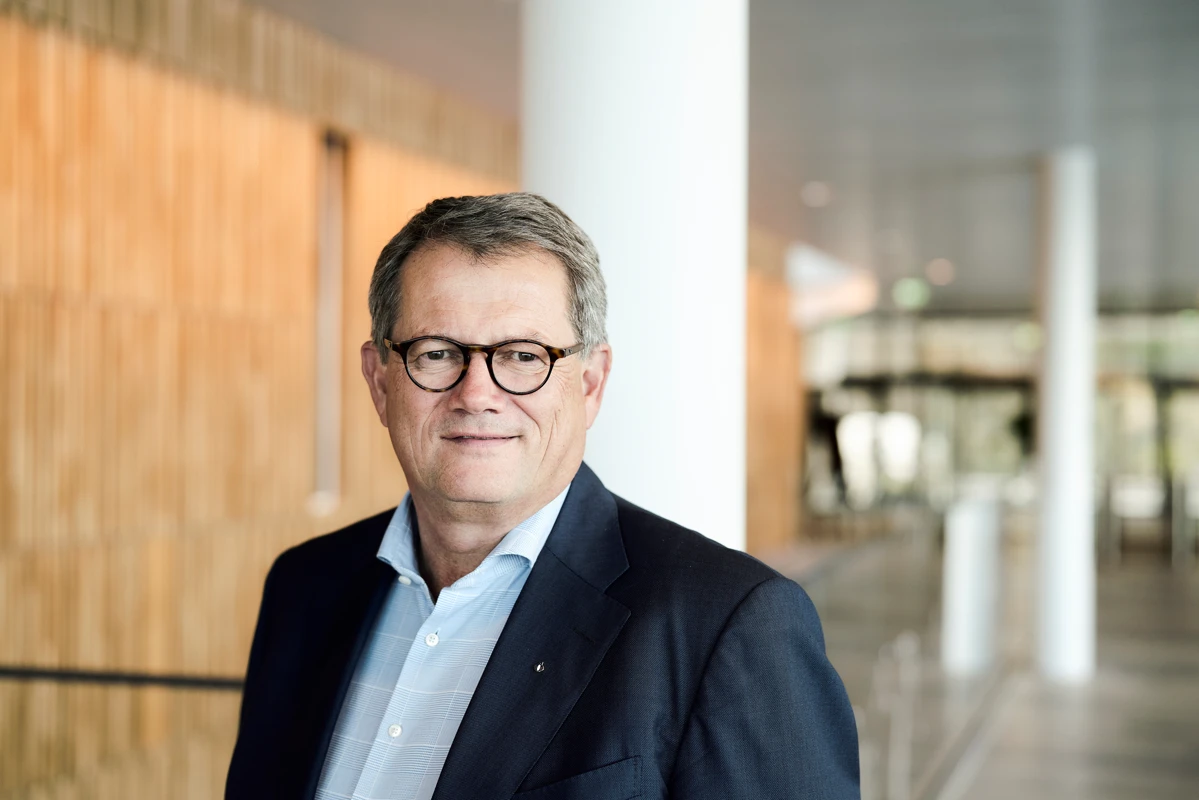
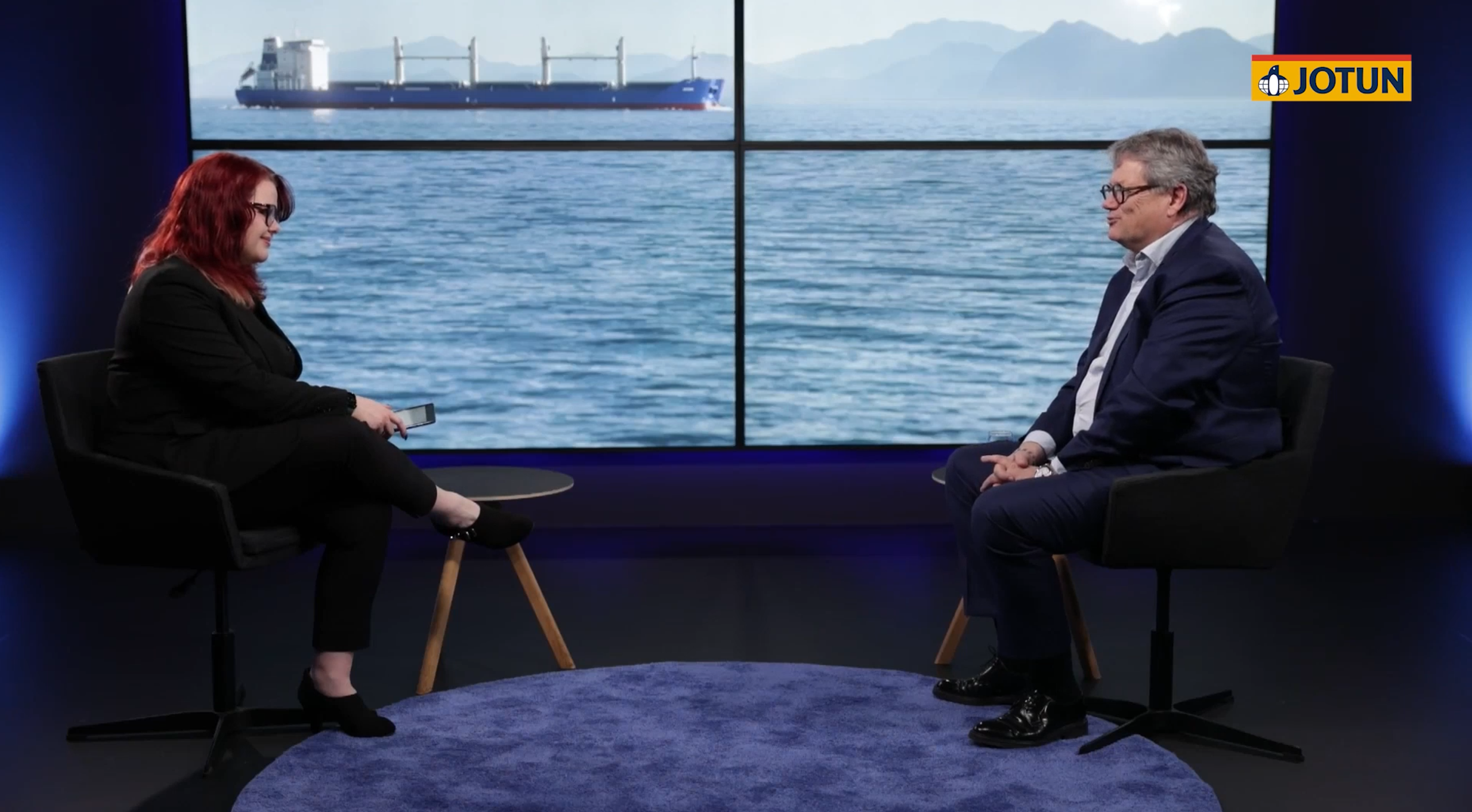
“Maritime has been a very important part of Jotun since the beginning,” said Morten Fon, President and CEO of Jotun in a recent interview with Tradewinds.
Already in the post-war years, the company began establishing delivery points around the world to support Norwegian ship owners operating internationally. Later came factories, technical service presence and a global organisation that enabled Jotun to serve ship owners wherever they operated. Over time, this presence helped establish Jotun as a long-term partner to the shipping industry – closely connected to its operational realities.
Adapting to change
Shipping has never been static, and neither has Jotun. Over the decades, both regulation and technology have driven significant change, often requiring rapid adaptation.
“We have had to adapt to regulations continuously for 100 years,” Fon noted, pointing out that regulatory change is nothing new for the industry.
Alongside regulation, certain technological shifts have fundamentally changed how vessels are protected and operated. In the early 2000s, when tin containing antifouling coatings were banned.
“Our transition to copper as an active ingredient marked a major step forward and shaped the next generation of hull protection. We must say that proved to be a good choice.”
Another milestone happened 15 years ago with the launch of Jotun’s Hull Performance Solutions (HPS).
“By combining advanced hull coatings with performance measurement, technical service and performance guarantees, we moved beyond products towards performance,” Fon explained.
“By combining advanced hull coatings with performance measurement, technical service and performance guarantees, we moved beyond products towards performance.”
Morten Fon
CEO and President, Jotun
“By combining advanced hull coatings with performance measurement, technical service and performance guarantees, we moved beyond products towards performance.”
Morten Fon
CEO and President, Jotun
The impact has been tangible and an eye-opener beyond the shipping industry. In just one year, customers using Jotun to coat their vessels avoided 11.8 million tonnes of CO₂ emissions and saved around USD 2 billion in fuel costs. For ship owners, these results strengthen competitiveness. For the wider industry, they represent meaningful progress at scale.
“This is important for us, important for our clients, and also important for the environment,” Fon said.
Sustainability and robotics
Today, sustainability is one of the defining challenges for global shipping.
“Sustainability will be a crucial point going forward,” Fon said. “So, we have to continue to adapt and we believe we can play a role in helping the industry to become more sustainable. But we cannot do it alone. We have to do it together with all other suppliers and the ship owners themselves and how they operate the ships. But we believe we have a role to play in that development.”
At the same time, Jotun is clear that real progress cannot be achieved alone. Improving the environmental performance of shipping depends on close cooperation between ship owners, suppliers and other industry partners – and on how vessels are operated day to day.
“We cannot do it alone,” Fon emphasised. “But we believe we have a role to play.”
For Jotun, that role is increasingly about enabling customers to make better operational decisions, supported by proven technologies and long-term partnerships.
While coatings remain fundamental to hull performance, Jotun is also preparing for a future where paint alone is not enough.
“In the future, we will need more than paints and coatings,” Fon said.
This thinking has led to new solutions designed to complement traditional hull performance.
“That is why we have actually now developed a robotic solution. We call it the HullSkater and is a part of our Hull Skating Solutions. That will help us to keep the hull clean in the future.”
Used alongside advanced coatings, such solutions aim to reduce hull fouling for vessels in-service and help maintain energy efficiency over time.
“Our commitment to keeping the hull clean will be based on both coatings and technology,” Fon noted, describing it as another important step change for the industry.
Building on the culture
Reaching a 100-year milestone naturally invites reflection. For Jotun, it is also about looking forward – anchored in a strong corporate culture that has remained consistent through decades of growth and change.
“We have a very strong corporate culture built on loyalty, respect, boldness and care. That is what we want to build on in the future as well,” Fon said.
As the company plans for the next century, the strategy remains firm.
“We are planning for the next 100 years. We will continue to develop the organisation, to develop new customer offerings and make sure that we run the development of the industry.”
“It will be exciting,” he concludes.
Watch the full interview below.